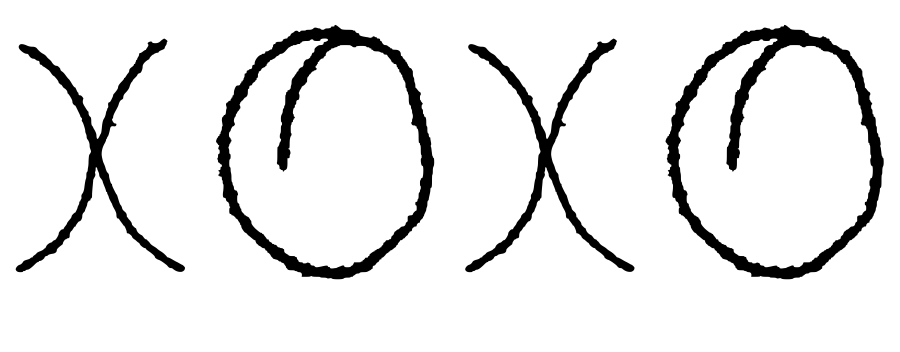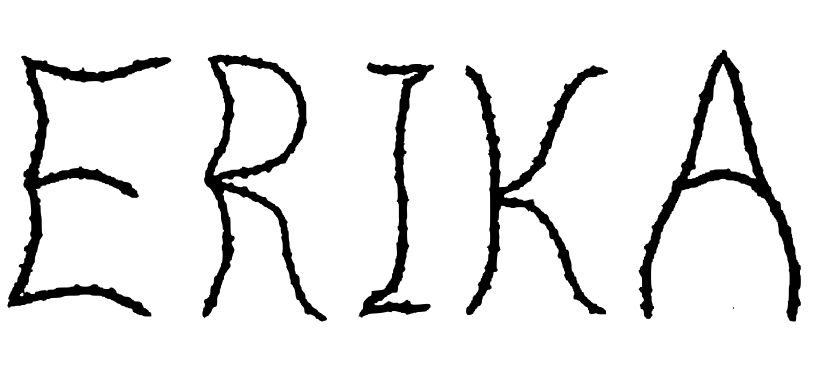
Hello, my name is Erika Gauvin, and I am currently pursuing my MA/MLIS in Digital Humanities at the University of Alberta. A little tidbit about me, I identify as a creative artsy person, I have a BFA in ceramics from Georgia State University, and I am a big crafter, maker of many mediums (paint, drawing, knitting, crocheting, you name it, I probably have tried it! and if not, I would probably want to discover that new-to-me craft). Additionally, a big part of my identity that has driven my artistic practice and research is my cultural heritage. I am Japanese-American and fluent in English and Japanese. Although I have a deep love and appreciation for my heritage, I also struggle and have an immense amount of anger for the Colonialist society these nations were and currently are as a governing body. I understand that I am a single person who cannot resolve these issues, but I hope that, through my academic journey of research creation with a critical lens, I can provide some good to this chaotic planet that humans have extorted.
Which leads me to my final project (and ongoing long-term project) of embroidering a Font inspired by one of the traditional Ainu Embroidery methods, “chijiri.” For those unfamiliar, the Ainu people are the Indigenous people of Northern Japan. Unfortunately, it is not a unique tale, but the Ainu people were colonized and forced to assimilate into Japanese society, losing much of their culture, heritage, and language. They were officially recognized as Indigenous peoples of Japan only in 2008, which sparked a cultural awakening, especially of Ainu embroidery. The Ainu believed that certain embroidered patterns and styles could ward off evil spirits, as seen in some abstract imagery of chains and thorns. My overarching goal for this project is to expand awareness of Ainu embroidery, and I thought creating a typable form of the embroidery would be a great way to do so. Currently, I have accomplished the Uppercase of one of the three techniques of “chijiri” embroidery. As this project expands, I will include lowercase letters and punctuation such as (!?,:;.), the Japanese katakana alphabet system, and other “chijiri” techniques. Below is an image of the embroidered letters so far.
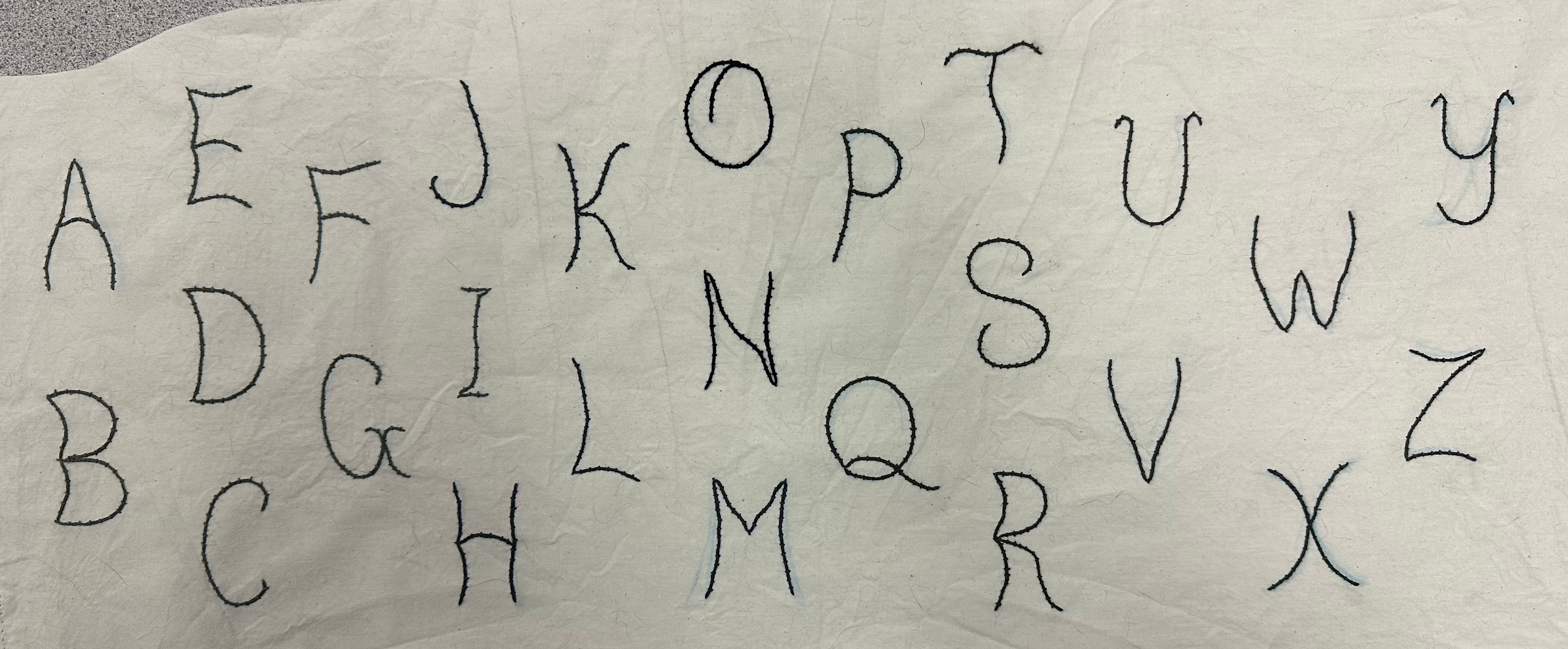
The time per letter varies, but it takes roughly 20-40 minutes. Hopefully, as I continue this project, I will become faster and complete a letter on the first try. At times, I struggle to ensure the stitches are consistent and the shape is symmetrical, which is a requirement for Ainu embroidery. This may sound strict, but I want to maintain the integrity of the embroidery method because this community has been exploited for centuries. Because the Ainu language is an oral language, there is no true written system, so it unfortunately relies on either the Latin alphabet or Japanese Katakana. Therefore, I believe the very least I can do in creating this font is to embroider it in the traditional manner, as a mark of my utmost respect for this craft and culture.